
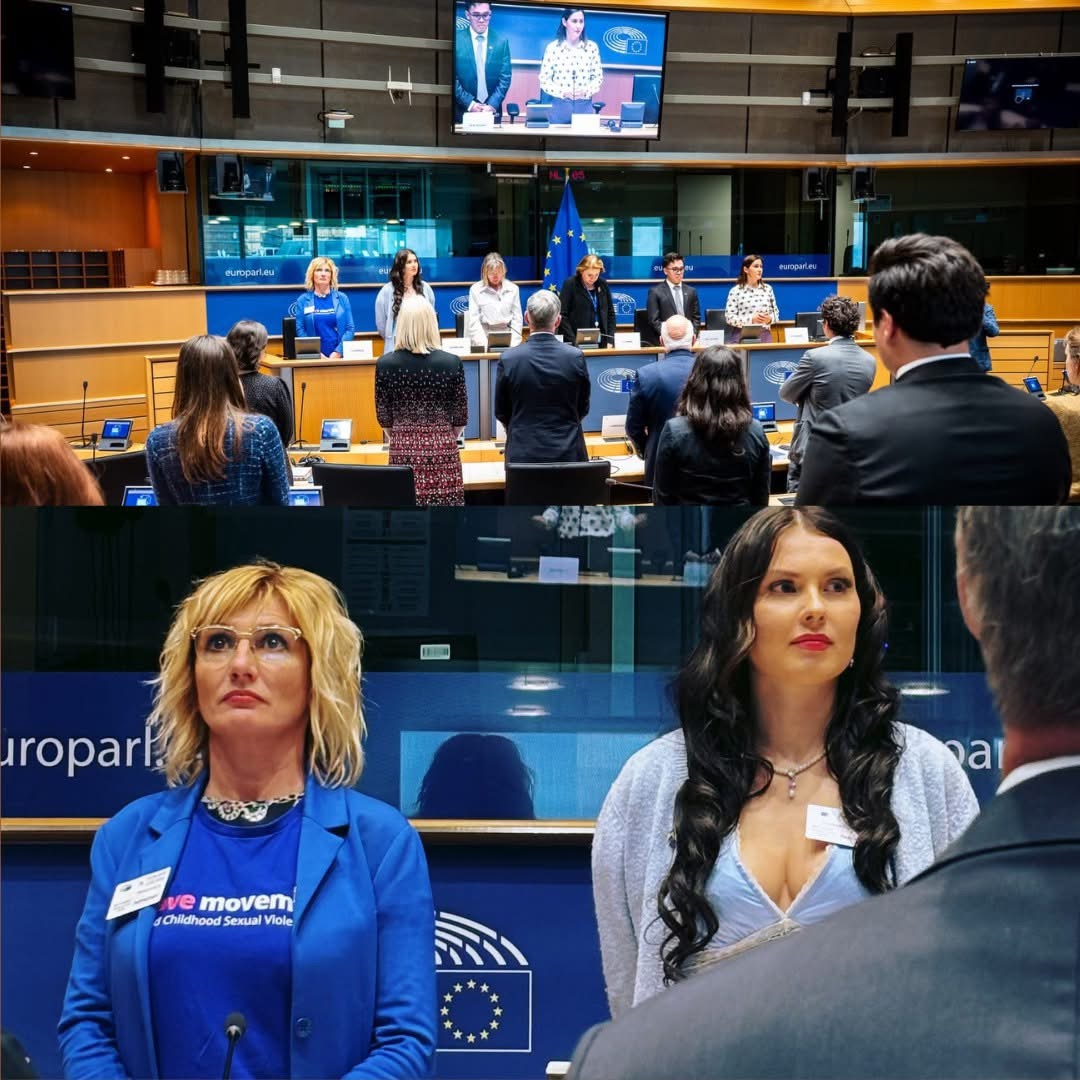
As sexual violence against children continues to rise, particularly in the digital environment, our organization remains committed to working with European institutions to advocate for stronger protections for minors and to promote legislative responses that are commensurate with the challenges at hand.
As you read this article, children are being sexually exploited online. The data presented in this speech highlight an extremely grave reality: every second, ten children are victims of sexual exploitation facilitated by digital tools. Behind these figures are children whose fundamental rights, dignity, and integrity are being severely violated. This reality calls for collective and sustained action by European institutions, public authorities, judicial authorities, digital platforms, researchers, organizations, and civil society.
A Long-Term European Commitment

Since April 2023, our president has been speaking regularly at the European Parliament in Brussels, alongside members ofthe Brave Movement, Be Brave France—of which she is also an active member—Lydie Drame, and numerous survivors.
The goal of these initiatives is to amplify the voices of victims and survivors, raise awareness among European policymakers about the urgent need to strengthen child protection, and promote ambitious, harmonized, and effective European legislation against child sexual abuse and sexual violence against minors, both online and offline.
Elien Rebirth is a member of ChildSafetyON, a French coalition that brings together several nonprofit organizations dedicated to child protection: the Fondation pour l’enfance, CAMELEON Association, Be Brave France, Elien Rebirth, ECPAT France, Enfance Majuscule, e-Enfance/3018, etc. …

This national initiative is itself part of a broader European framework—the ECLAG (European Child Safety Online Advocacy Group) coalition—which brings together more than 60 organizations across the continent. All share the same goal: to ensure effective protection for children online and to push for the adoption of a strong European legislative framework to combat sexual violence against minors.
Bringing the voices of survivors to the heart of European institutions
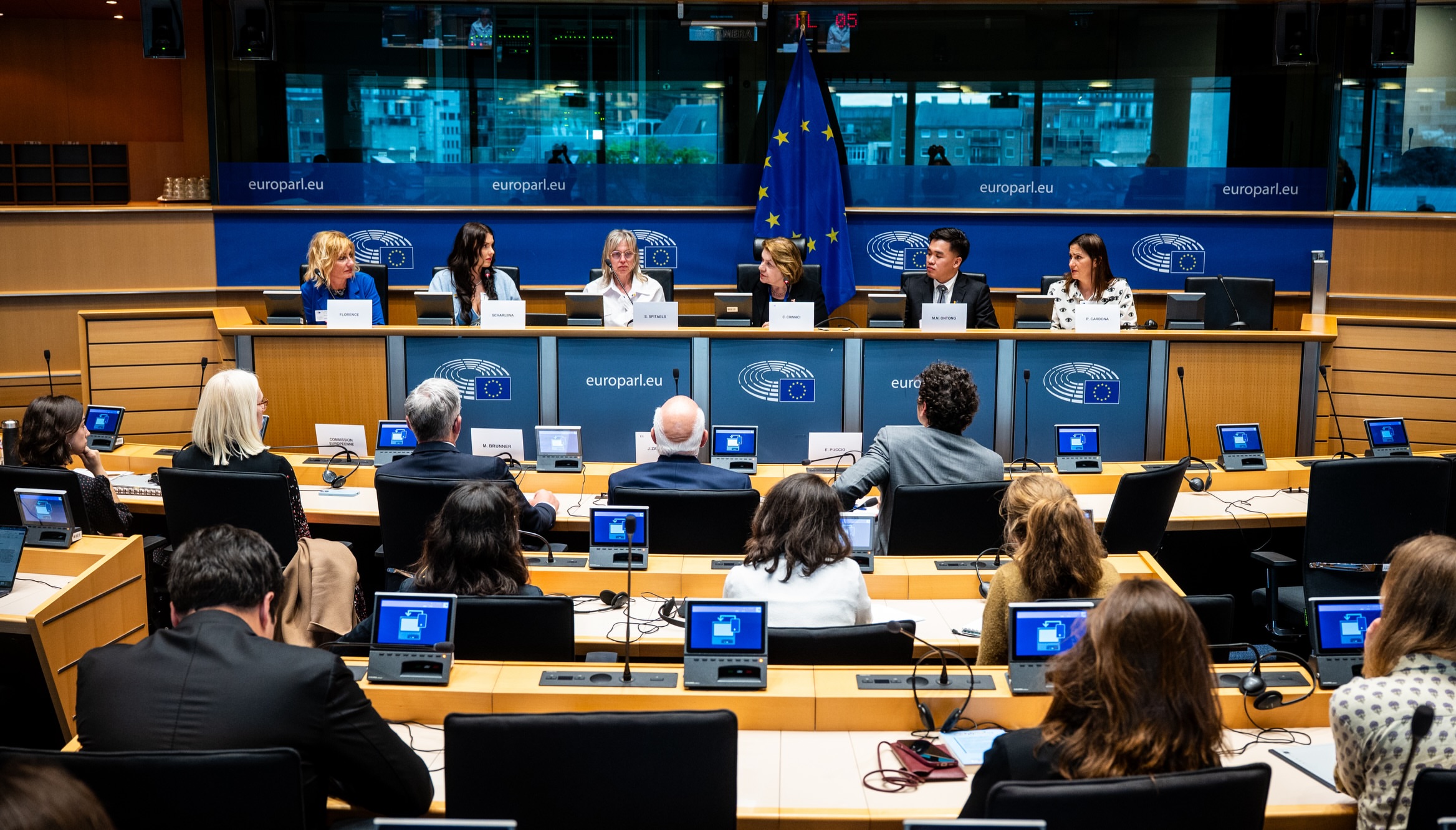
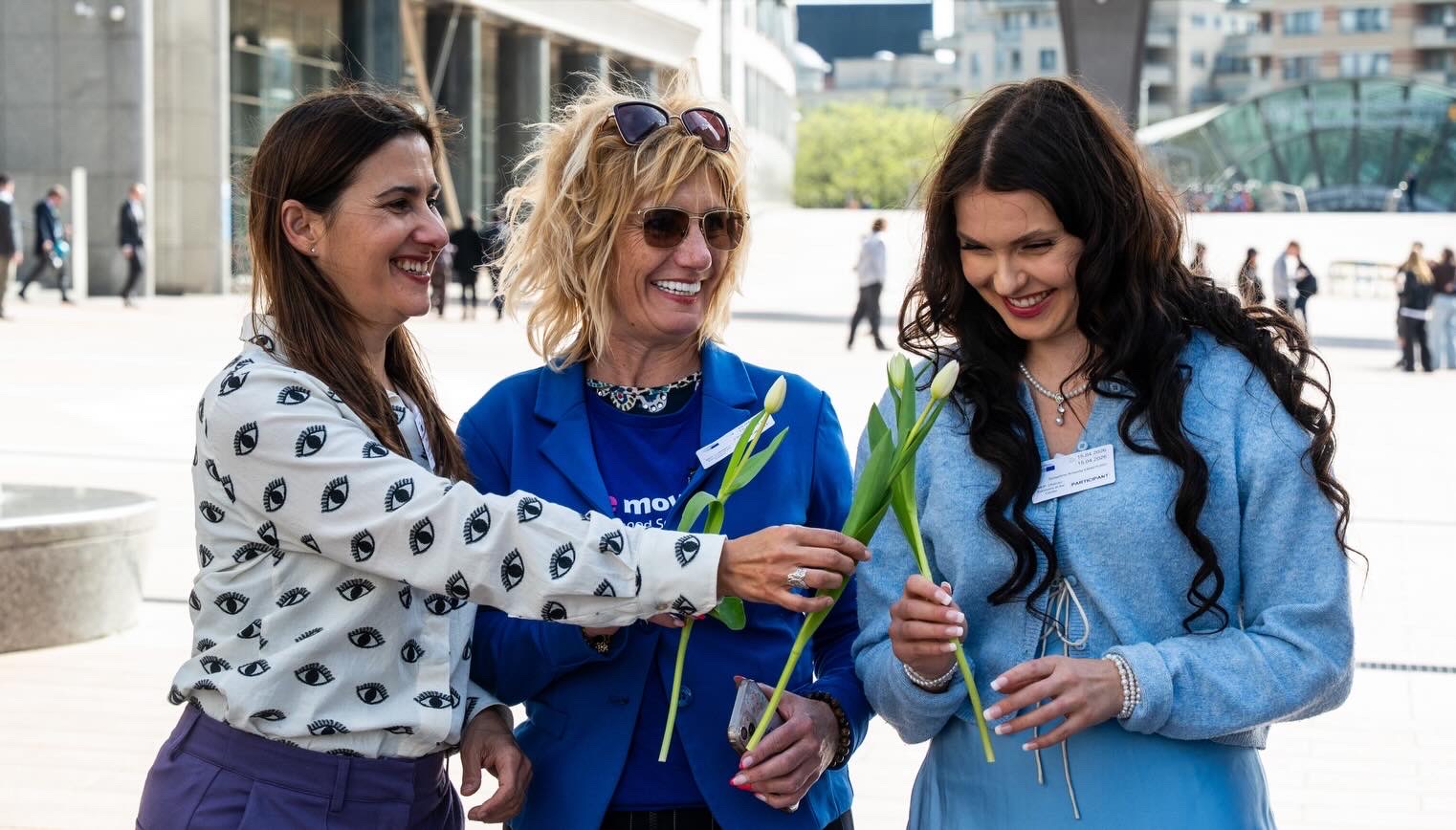
On April 15, 2026, our president once again addressed the European Parliament alongside survivors—including Scharliina, Patricia, Sandra, and Mark N.—as well as representatives of international organizations and stakeholders committed to combating sexual violence against children.
This meeting was attended by, among others:
- Javier Zarzalejos, Chair of the Committee on Civil Liberties, Justice, and Home Affairs (LIBE)
- Caterina Chinnici, Member of the European Parliament and a judge serving on this committee
- Magnus Brunner, European Commissioner for Home Affairs and Migration
- The Secretary General of the European Parliament’s Intergroup on the Rights of the Child
- Several Members of the European Parliament and representatives of civil society
The purpose of this presentation was to highlight a reality that cannot be ignored: sexual violence against children—sometimes beginning at a very young age—causes deep trauma, the consequences of which can have a lasting impact on their entire lives.
Through their testimonies, the survivors emphasized the need to place their experiences at the center of public decision-making in order to develop policies that are truly tailored to the needs of victims and to strengthen prevention, protection, and support mechanisms.
A Major Challenge: Protecting Children in an Ever-Changing Digital Environment
The discussions focused largely on the new challenges posed by digital technology and the rapidly evolving forms of online child sexual exploitation.
The Internet Watch Foundation (IWF) presented some particularly alarming data:
- Nearly 300,000 confirmed reports of child sexual abuse material in 2024, a figure that continues to rise,
- 62% of this content is hosted in Europe,
- An explosion in the amount of child sexual abuse material generated or altered using artificial intelligence, giving rise to new forms of crime.
On April 3, 2026, the European legal framework allowing digital platforms to voluntarily detect child sexual abuse content expired, due to a lack of agreement between the European Parliament and the Council of the European Union on its extension. In the absence of long-term legislation, this situation creates legal uncertainty that could reduce the ability to detect and report these crimes online. We call on the European institutions to swiftly adopt a sustainable framework that ensures effective protection for children while respecting fundamental rights.
The discussions also shed light on the phenomenon of remote sexual exploitation of children. Examples presented at the meeting—particularly those from the Philippines—showed how certain criminal networks enable perpetrators in Europe to finance and commission sexual abuse against vulnerable children abroad, underscoring that child sexual exploitation is a transnational phenomenon that requires enhanced cooperation among states, European institutions, judicial authorities, digital platforms, and specialized child protection agencies.
Solutions exist: the urgent need for collective action
Participants also noted that technological solutions to improve the detection of child sexual abuse material already exist. Innovative tools, such as Percipion, developed by Aeteos, demonstrate the potential of new technologies to support prevention and strengthen the fight against these crimes.
The challenge now is to accelerate the development and deployment of effective solutions within a framework that respects fundamental rights, while ensuring enhanced cooperation among all relevant stakeholders.
Several European officials reaffirmed that the safety, dignity, and fundamental rights of children must remain at the heart of future European policies, emphasizing the importance of involving survivors and organizations working on the ground in the legislative process to ensure that responses are tailored to the realities faced by victims.
A commitment that continues at the European level
We are proud to contribute to this work alongside European partners who are fully committed to child protection. Giving voice to victims, sharing our on-the-ground expertise, and participating in discussions at the European level are essential tools for bringing about lasting change in public policy.
We extend our sincere thanks to our partner organizations, to the survivors who agreed to share their stories, and to the institutional leaders who attended this meeting. Their collective commitment helps advance the fight against child sexual abuse and sexual violence against children, and helps build a Europe that increasingly protects the rights, safety, and dignity of every child.