
Our Vision
A Message from the President
There are destinies that defy the beaten path. Mine was forged in the storm—not as a futile burden, but as the foundation of an unwavering commitment.
I grew up in a place that should have been a sanctuary but was nothing more than an abyss. Violence took on every form there: the brutality of physical blows, the sting of harsh words, humiliations, and the most intimate desecration of rape and incest. These were the only dawns of my childhood and adolescence.
I know all too well that utter loneliness in the face of the upheaval caused by trauma. When you’re a woman, alone, without children, the healthcare and legal systems erase you: you become a blind spot, an administrative nonentity in the face of the institutions’ silence. It is this void that I am fighting against today, so that no survivor will ever again find herself alone in the face of the void created by the very structures meant to protect her.
I turned my wounds into strength, which led me to a career in humanitarian work. For more than ten years, with the Red Cross and Restos du Cœur—both in France and in distant conflict zones—I learned the true meaning of “reaching out.”
In response to this twofold need, the Elien Rebirth association was founded in July 2019 to combat child sexual abuse—a scourge that has been buried in silence for far too long. At the heart of this fight, the protection of people with disabilities stands as an absolute priority, given how callously their vulnerability is exploited.
Giving a voice to those who have been silenced is my life's work.
Our Vision: Never Again Silence
No society can claim to be just as long as it tolerates—even by omission—child sexual abuse and sexual violence against children. These crimes are not isolated individual tragedies: they are a symptom of systemic, institutional, social, and digital failures that allow this violence to persist and go unpunished. Our mission is to fundamentally transform the structures that make child sexual abuse possible.
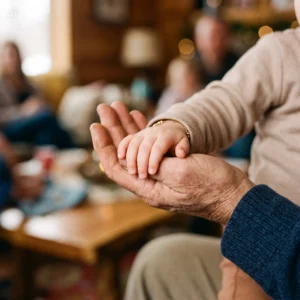
A survivor-centered approach
Our work is guided by a core principle: the voices, rights, and expertise of survivors must be at the heart of any response to this violence. This requirement echoes the commitments made at the First Global Ministerial Conference on the Elimination of Violence against Children (Bogotá, November 2024) and will continue at the second conference, to be held in Manila in November 2026.
This means recognizing survivors’ voices as a legitimate source of knowledge, involving them in our prevention and advocacy efforts, and rejecting any sensationalist approach that would reduce them to the status of mere victims.
We also base our interventions on a trauma-informed approach: understanding how trauma affects victims’ memory and behavior is essential to ensuring that we do not unintentionally exacerbate their suffering or dismiss their testimony.
Transform systems, not just mindsets

Certain institutional practices—such as rigidity, silos, and a lack of training—can, without any malicious intent, render victims invisible or lead to their mistreatment. Gaps in care, a lack of coordination among stakeholders, and insufficient specialized training: these shortcomings, though rarely deliberate, have real and sometimes irreversible effects on the very people they are meant to protect.
That is why our advocacy—both at the national and international levels—goes beyond simply raising awareness: it aims to advocate for and propose concrete changes to public policies and professional practices.
Our vision is firmly rooted in the framework of human rights, particularly the rights of the child. No act of child sexual abuse can be downplayed or excused by the context, the institution, or the relationship with the perpetrator.
Our Ambition
We want to help build a society where:
- The word of a child or a survivor is never questioned;
- Institutions are trained and empowered to act effectively, without any disruption to the process;
- Prevention is a collective responsibility, not the burden of victims or their families;
- Reconstruction can be built on active listening, mutual support, and a society that comes together.